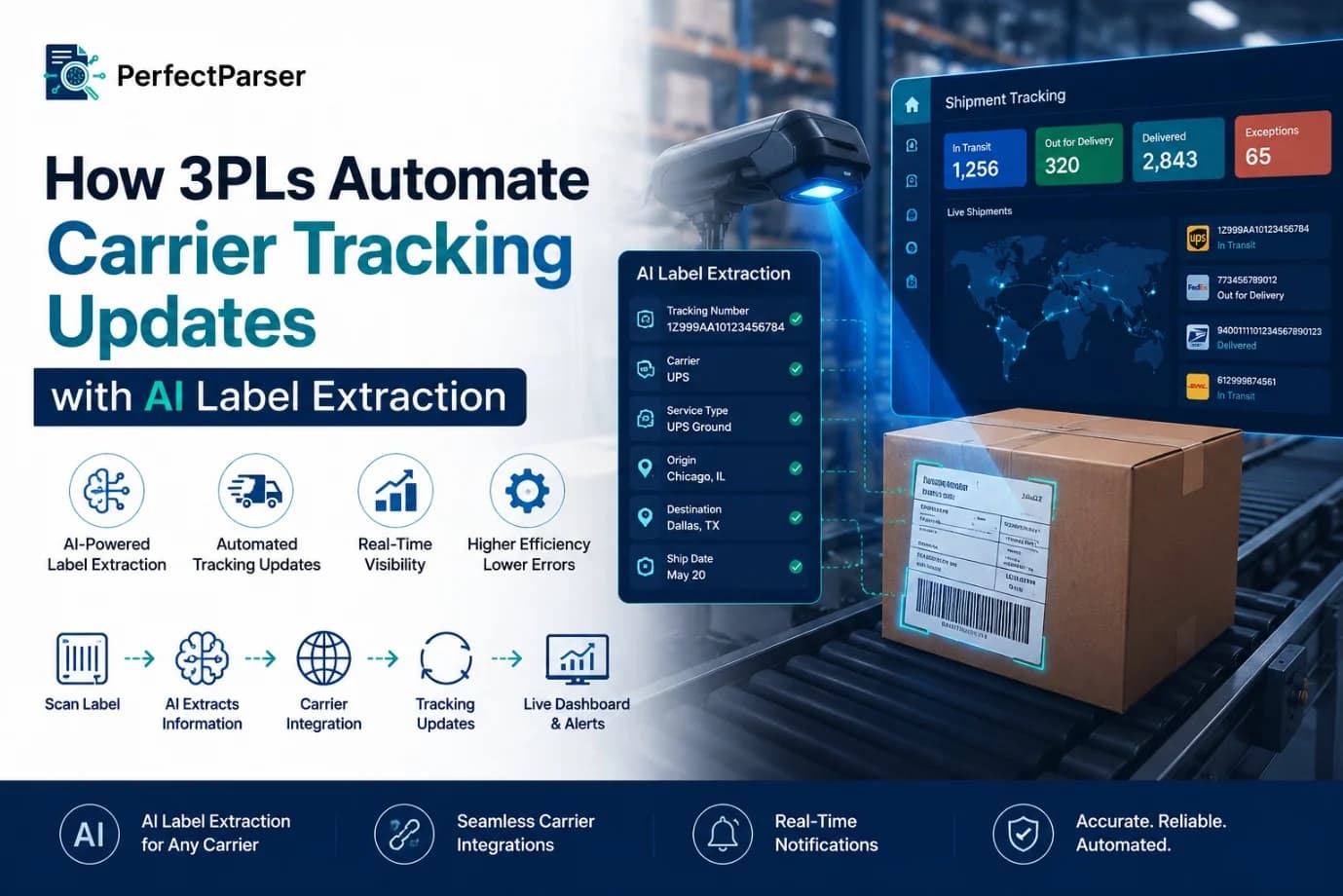
Managing shipment tracking across multiple carriers has become increasingly challenging as supply chains grow more complex. Customers expect real-time updates, while warehouse teams need accurate shipment visibility to prevent delays and reduce manual work.
This is where 3PL carrier tracking automation makes a significant difference. Instead of manually entering tracking numbers from shipping labels, modern AI systems automatically read carrier labels, capture shipment details, and synchronize tracking information across logistics platforms.
In this guide, you'll learn how AI-powered label extraction works, why it matters for third-party logistics providers, the implementation process, common challenges, and best practices for improving operational efficiency.
Why Carrier Tracking Has Become More Complex
Third-party logistics providers often work with multiple shipping carriers, each using different label formats, tracking numbers, and documentation standards. As shipment volume grows, manually processing these labels becomes increasingly difficult.
Common operational challenges include:
- •Manual data entry errors
- •Delayed shipment visibility
- •Missing tracking information
- •Slow customer communication
- •Increased labor costs
- •Difficulty handling peak shipping seasons
Even a small typing mistake can lead to incorrect shipment status, delayed deliveries, or customer complaints.
Automating the process helps eliminate these issues while improving overall operational performance.
How AI Reads Shipping Labels Automatically
Modern logistics platforms use computer vision and intelligent document processing to analyze shipping labels immediately after they are scanned or uploaded.
With modern AI shipping label extraction, systems recognize different carrier layouts, identify important shipment details, and extract structured data automatically without rigid templates.
For example, the system can identify:
This process is commonly referred to as AI label extraction logistics, allowing warehouse teams to process thousands of shipments with minimal manual effort.
From Label Capture to Real-Time Shipment Visibility
Once shipment information is extracted, the logistics platform automatically sends the tracking number to the appropriate carrier.
The system then begins receiving status changes throughout the shipment journey.
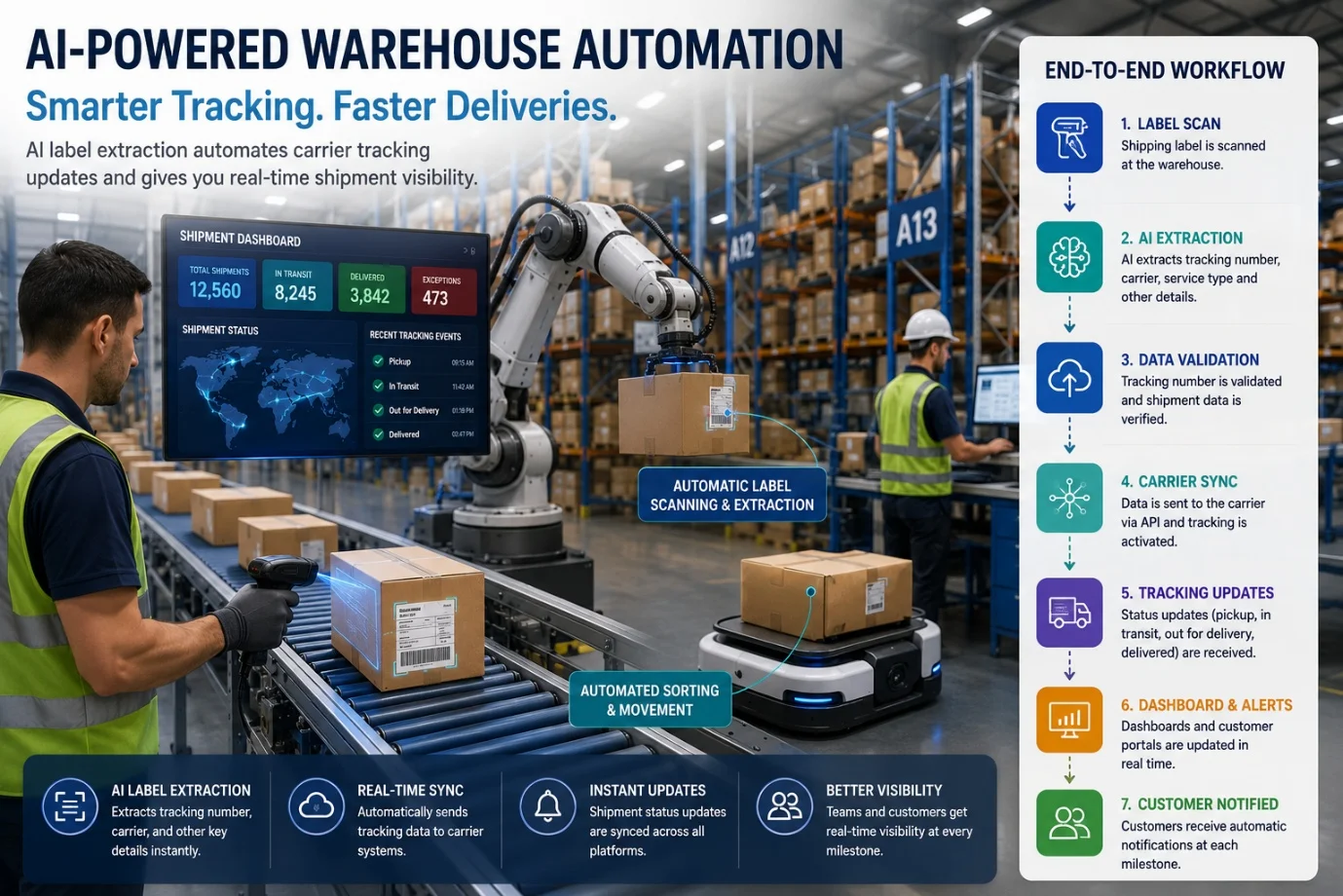
This enables Automated carrier tracking updates, ensuring every milestone—from pickup to final delivery—is synchronized without manual intervention.
Typical workflow:
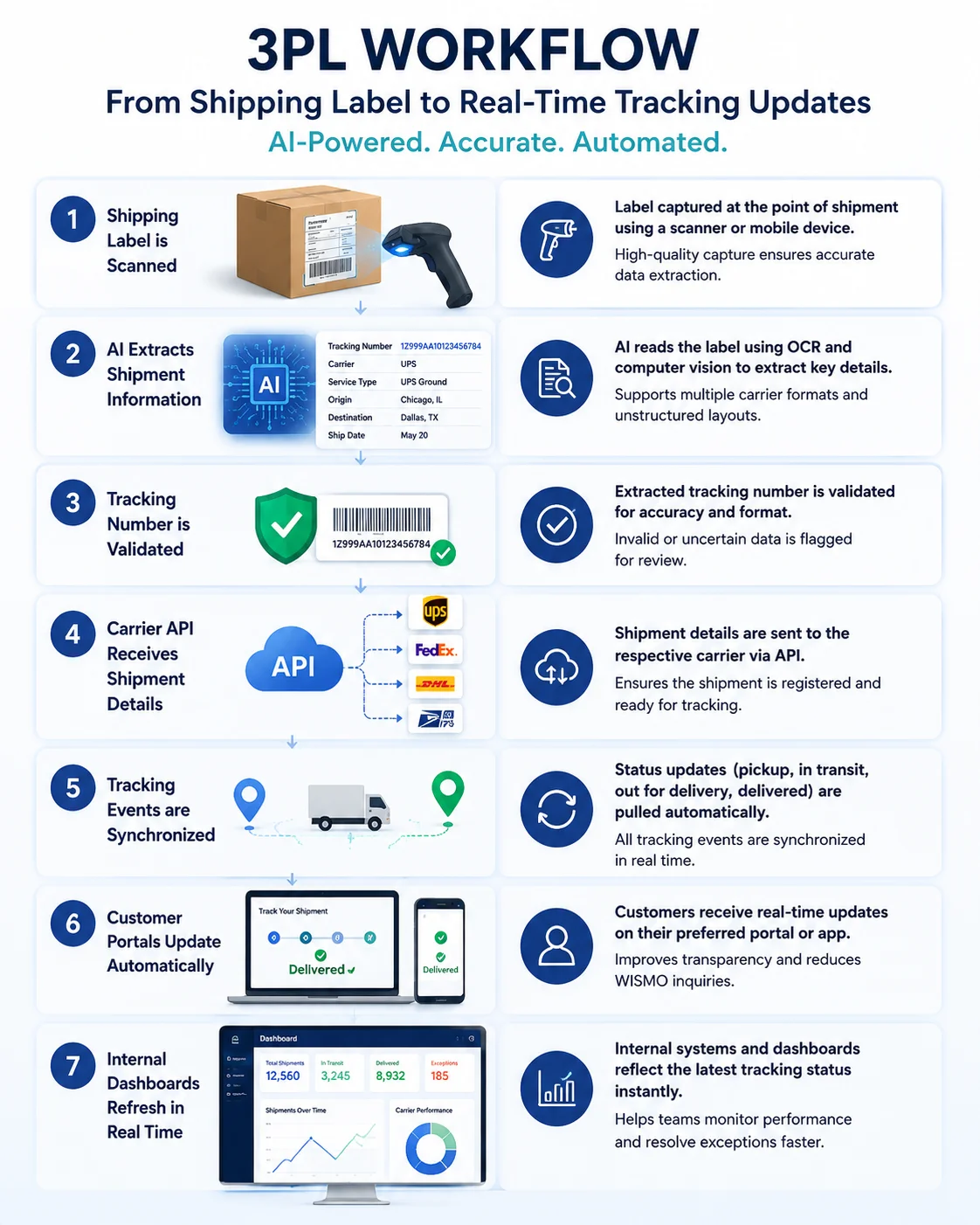
- •Shipping label is scanned.
- •AI extracts shipment information.
- •Tracking number is validated.
- •Carrier API receives shipment details.
- •Tracking events are synchronized.
- •Customer portals update automatically.
- •Internal dashboards refresh in real time.
Because this process happens almost instantly, logistics teams spend less time searching for shipment information and more time resolving exceptions.
Benefits for Logistics Providers
Automation delivers measurable improvements across warehouse operations.
Faster Processing
Warehouse staff no longer need to manually enter tracking numbers. This reduces processing time for every shipment.
Better Accuracy
AI minimizes human typing errors and validates extracted information before submission.
Improved Customer Experience
Customers receive shipment updates sooner, reducing support inquiries and improving satisfaction.
Higher Operational Efficiency
With repetitive tasks automated, employees can focus on exception handling, customer service, and warehouse optimization.
These improvements make Third-party logistics automation an increasingly valuable investment for growing logistics companies.
Real-World Example
Imagine a fulfilment center processing 12,000 outbound packages daily.
Without automation:
- •Employees manually enter tracking numbers.
- •Multiple carrier portals require separate updates.
- •Errors delay customer notifications.
- •Teams spend hours correcting shipment records.
After implementing AI:
- •Labels are scanned automatically.
- •Tracking numbers populate instantly.
- •Carrier systems synchronize automatically.
- •Customers receive updates within seconds.
The warehouse handles higher shipment volumes without increasing staffing levels.
Best Practices for Successful Implementation
Organizations achieve better results when automation is introduced with a structured implementation plan.
Consider these best practices:
Standardize Label Collection
When warehouse teams OCR shipping labels, using consistent scanning procedures improves image quality and extraction accuracy.
Validate AI Results
Include confidence scoring and automated validation rules for critical shipment fields.
Connect Existing Systems
Integrate warehouse management systems, transportation management systems, ERP software, and carrier APIs.
Monitor Exceptions
Even advanced AI systems occasionally require human review for damaged labels or unusual layouts.
Train Warehouse Teams
Employees should understand how automated workflows function and how to resolve exceptions efficiently.
These practices support long-term success when adopting AI in supply chain tracking across complex logistics environments.
Common Mistakes to Avoid
Many organizations expect automation alone to solve every operational issue. Instead, success depends on both technology and process improvements.
Avoid these common mistakes:
- •Using low-quality label scans
- •Ignoring validation rules
- •Delaying API integration testing
- •Failing to monitor extraction accuracy
- •Not updating carrier configurations regularly
Addressing these issues early improves implementation success and long-term reliability.
Choosing the Right Automation Platform
Not every solution offers the same capabilities. When evaluating platforms, look for:
- •High OCR accuracy
- •AI-based document recognition
- •Multi-carrier support
- •API integrations
- •Dashboard reporting
- •Security compliance
- •Scalability
- •Exception handling workflows
Many organizations now rely on Logistics label automation software because it combines document extraction, tracking synchronization, and workflow automation within a single platform.
Conclusion
As shipment volumes continue to grow, manual tracking processes become increasingly difficult to manage efficiently.
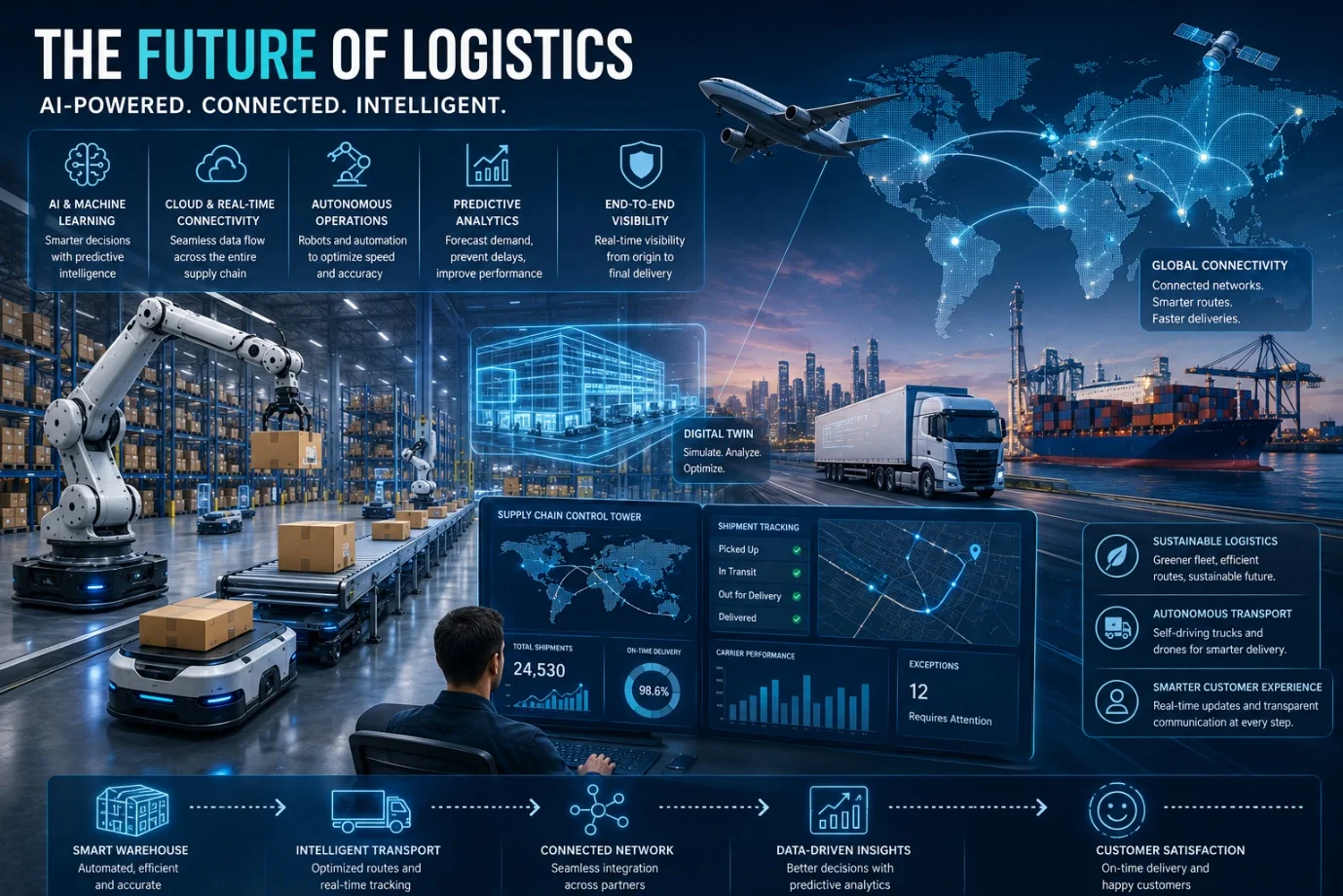
Organizations that adopt intelligent automation today position themselves for greater scalability, stronger operational control, and improved supply chain visibility in the years ahead.
If you're evaluating logistics automation solutions, start by identifying repetitive tracking tasks, measuring current bottlenecks, and selecting an AI platform that integrates seamlessly with your existing warehouse and transportation systems. A well-planned implementation can deliver measurable improvements in efficiency while supporting future business growth.
Try PerfectParser Free
Extract data from your first documents today. No credit card required — 20 free credits included.
Start Extracting →